
Come along with me on a little trip down memory lane.
Years ago, my team and I flew to London to meet an agency that promised to help us get more qualified leads. They walked us through their packages, saved the “ultimate” tier for last, and pitched it with complete confidence: “This is where we manipulate people into needing your product.”
We said thanks but no thanks, and walked away feeling deeply icky.
That agency turned out to be Cambridge Analytica. (IYKYK.)
I hadn’t felt that exact level of marketing ick in a long time, until Google dropped some of its latest ad features.
The short version: Google is responding to zero-click search and AI answers with four new ad features. Some of them are very cool. But some of them cross a bit of an ethical line, in my opinion, and marketers should look closely before switching them on.
What are Google’s new ad features?
Casper and I went through four of them on Marketing Corner:
- The lead form replacement: Gemini chats with prospects inside your ad.
- Ads disguised as AI answers: this one rates high on the “icky” scale.
- Conversational discovery ads: WTF is Sylvanus Bent?
- Journey aware bidding (JAB): a new bidding model that promises to learn from your entire sales funnel instead of a single goal.
Which one feels the ickiest?
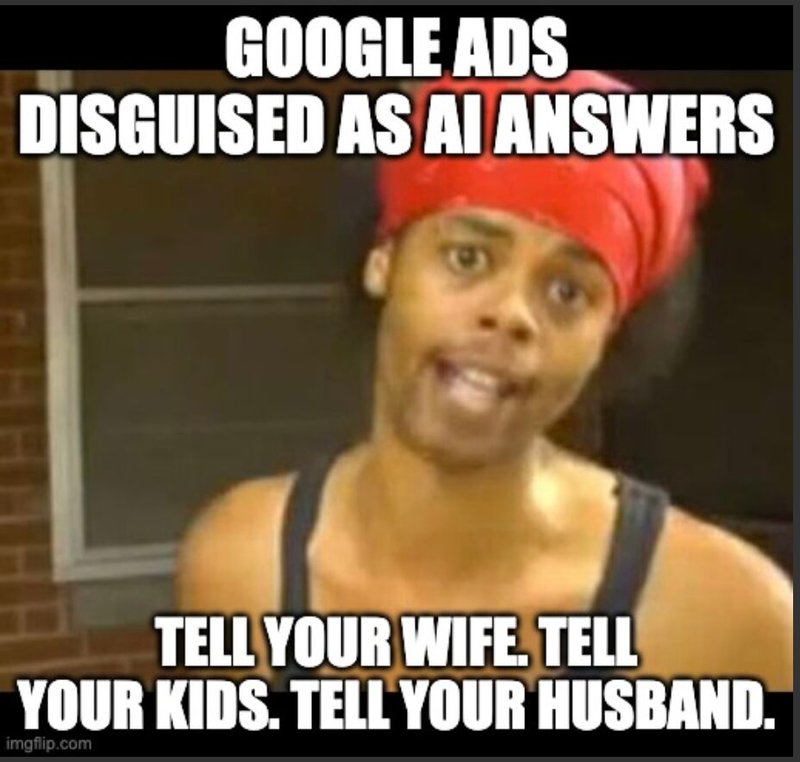
Ads disguised as AI answers. Tell your wife. Tell your kids. Tell your husband, too.
Should marketers be worried?
Don’t get me wrong, some of this is genuinely interesting. Gemini chatting with prospects inside your ad sounds useful, but there’s a massive catch to watch out for. Journey aware bidding could be a real step forward if it does what it promises.
The bigger question is what marketing ethics look like when the line between an answer and an ad gets this blurry. Just because a feature is available doesn’t mean your brand should use it.
Casper, our newest addition The Soundboard and I break it all down in Marketing Corner episode 161, including that massive catch and whether these features actually matter. All this AND soundboard galore.