
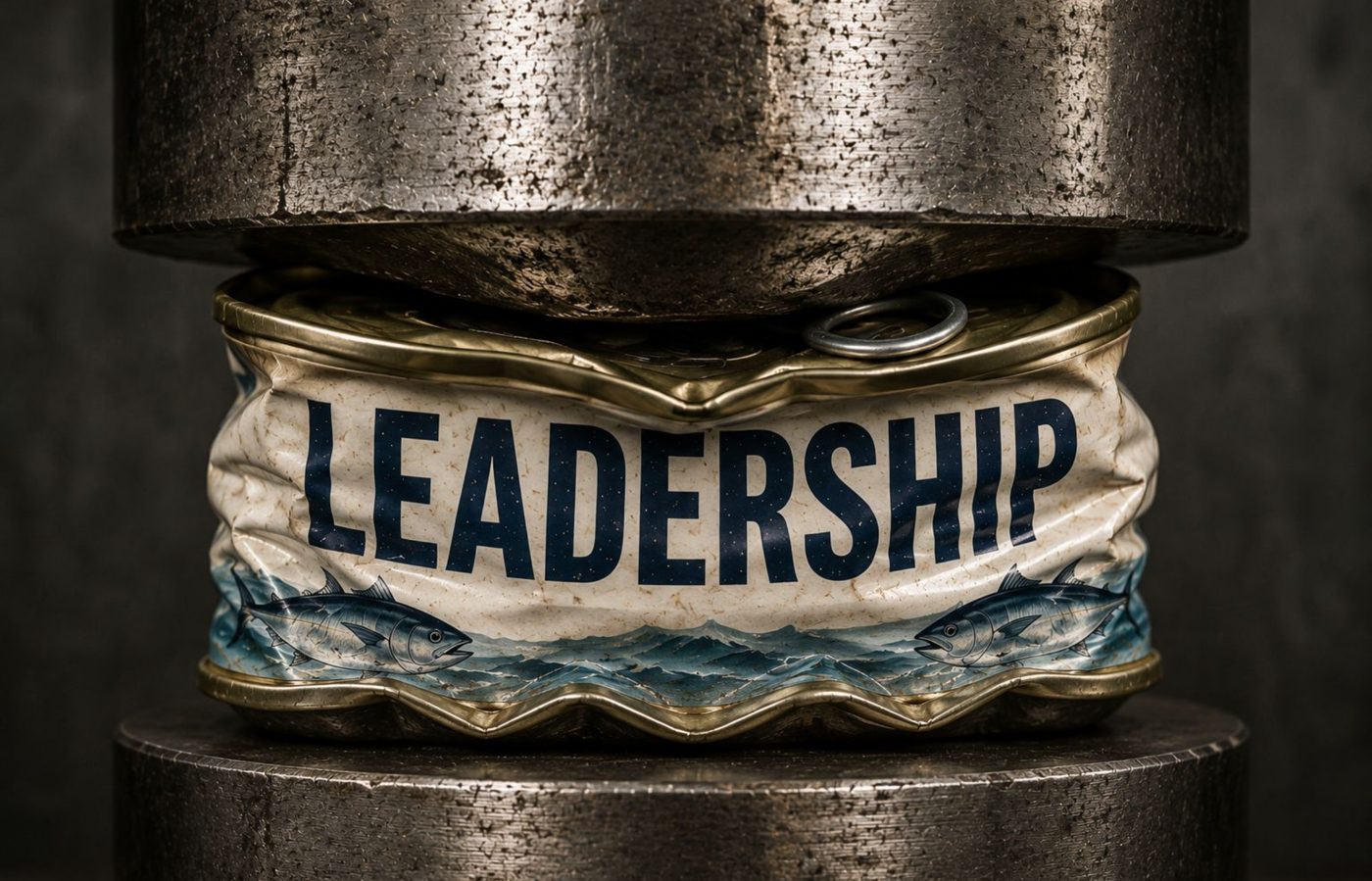
Being a leader can feel like being a tuna can. Pressure comes down from above, the same amount pushes up from below, and you sit in the middle trying to keep everything together and moving in the right direction.
The short version: the people squeezed in the middle are often the ones getting cross-functional work over the line. Harvard Business School research calls them “bridgers”. Most organisations don’t see them, don’t reward them and wear them down. If you lead people, find your bridgers, protect them and recognise them.
What does the squeeze look like?
Why is leadership like a tuna can? You’re getting crushed by intense pressure from above and equal pressure from below. Surviving that is hard enough. On top of it, you’re expected to build while being compressed.
You’re the connective tissue that makes sure projects cross the finish line, even when you’re not the one crossing it.
If this sounds familiar, it’s because this situation is very common. In a Harvard Business Impact survey of 600 midlevel and senior leaders, 88% of midlevel leaders say they feel, “caught between the demands of their senior leaders and the needs of their teams.” (Midlevel Leaders: The Bridge to Your Organization’s Future)
Who are the bridgers?
In “Why Great Innovations Fail to Scale” (Harvard Business Review, March-April 2026), Linda A. Hill, Emily Tedards and Jason Wild look at why good ideas stall. Their answer: many innovations fail because teams and organisations struggle to work together across boundaries, even when the idea itself is sound. The article is adapted from their book Genius at Scale, which Hill describes as the result of almost 20 years of research.
The leaders who close that gap, they call “bridgers”. Bridgers curate the right partners, translate across different ways of working and integrate everyone’s efforts to keep momentum going. They do it with emotional and contextual intelligence: they understand each stakeholder’s pressures and values, and adapt from one context to the next.
Read that description again and you’ll recognise the tuna can.
Why do organisations crush their bridgers?
When initiatives stall, organisations love to throw formal structure at the problem: more project managers, steering committees, working groups, 20-page governance docs. Which sure helps you build part of the bridge. But half a bridge is just a very expensive diving board.
The work that gets an initiative across the line happens between those structures. Someone builds trust, translates priorities, absorbs the political friction and takes the hits from above and below so that colleagues can deliver and look like heroes. Bridgers get other people across the finish line. They rarely cross it themselves, so they rarely get the credit.
Harvard Business Impact’s research shows the cost. 7 in 10 midlevel leaders say their “contributions go unrecognized by senior leadership” (Under Pressure, August 2025), and 85% reported experiencing burnout on a “weekly basis” (The Burnout Risk).
If your management model only rewards the people crossing the finish line, rather than the people building the bridge to it, you are crushing the exact people keeping your ship moving. You can’t put relentless pressure on the centre of an organisation and expect it to hold.
What can leaders do about it?
Recognition is the cheapest fix, and the effect is measurable. In the same research, weekly burnout rates dropped from 80% to 66% when midlevel leaders felt “recognized by senior leadership.” (Reinforcing Organizational Bridges) Harvard Business Impact names recognition as one of four supports midlevel leaders need, alongside autonomy, empowerment and psychological safety.
- Find them. Ask who is quietly holding cross-functional projects together. It’s often someone other than the name on the project plan.
- Protect them. Take political friction off their plate before you add another steering committee.
- Recognise them. Say it in public, and make bridging count in reviews, pay and promotion alongside delivery.
What if you’re the tuna can?
Find people outside the squeeze to talk to: a mentor, a peer, someone who has been the can before. I wrote more about that in 7 truths from 7 years of mentoring marketers.
So what’s the takeaway?
If someone is quietly holding several departments together while sitting in the middle of the squeeze, find out who they are, protect them and recognise them. Leave them unseen and you risk more than their burnout. You risk losing the people holding your organisation together.
Sources: Linda A. Hill, Emily Tedards and Jason Wild, “Why Great Innovations Fail to Scale”, Harvard Business Review, March-April 2026; Harvard Business Impact research on midlevel leaders, 2025 (linked above).